Tuesday, May 30, 2017

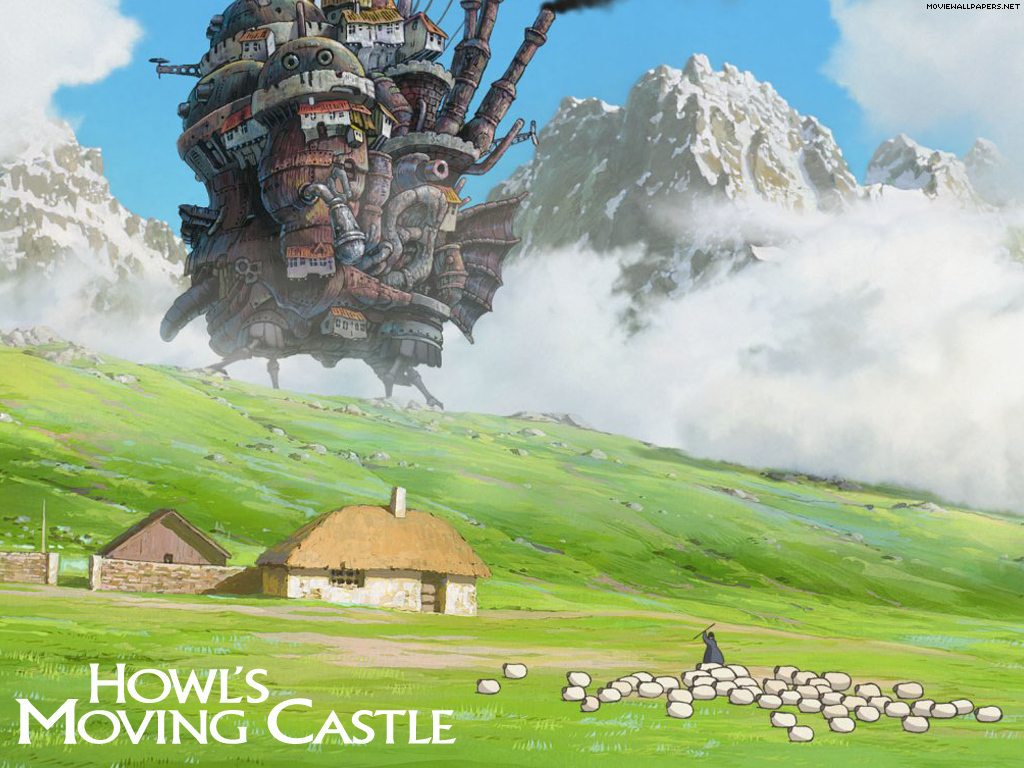
From the Guy that Brought You Totoro and Yubaba: Howl's Moving Castle


Image result for howl's moving castle

     In 2004, another creation of Hayao Mayazaki was released to the public: Howl's Moving Castle, based on the book by Diana Wynne Jones, which was published in 1986.

Image result for howl's moving castle sophie
     Once upon a time, a young woman named Sophie was working diligently in her late father's hat shop. Sophie is very reserved, but she is dedicated, zealous, and caring. She lives a quiet and unexciting life. But now that she's met a young wizard named Howl, her life will change forever. Jealous of Sophie's interaction with Howl, the Witch of the Waste visits the hat shop and places a curse on her, instantly turning Sophie into an old woman. She can't hide what's happened for long, so Sophie leaves her home and stumbles upon Howl's magic castle. It's a walking house with legs, and she enters, becoming Howl's "cleaning lady," while calling herself Grandma Sophie. With a war going on in Sophie's country, Howl and his many aliases have been ordered to the palace to give aid in the war. With the help of the burning fire called Calcifer, Howl's apprentice named Markl, and the scarecrow nicknamed "Turnip Head," will Sophie be able to break the curse she's under as well as help Howl find his heart, or are they both headed for an unhappy fate?

     The thing about anime films is that they sometimes come across as art more than other forms of animation. After all, anime is an art form from Japan, even before film was invented. 
Related image     In Howl's Moving Castle, Hayao Miyazaki demonstrates a creative use of color. Most of our settings in the film are very colorful: The Royal city, Sophie's hometown, the meadow that Howl gives to Sophie. The one thing that is not colorful is Howl's castle. Inside and out, the castle tends to look dark and gray, except for Howl's bedroom. Even Markl contrasts the look of the castle. As for Howl's bedroom, it looks a little bit like a gypsy's office. The rest of the castle doesn't look like that, thus making Howl all the more mysterious. A nearly colorless castle doesn't add to Howl's true self, it hides it. Those who have watched the film know that is takes a while for Sophie to make sense of why Howl is the way he is, and the difference between the general surroundings of Howl's castle and his personal quarters, (and even his hair color), makes the audience want to know more about Howl himself. 

Image result for howl's moving castle sophie and howl     Howl's Moving Castle is a love story as well as a story about overcoming fear and insecurities. Sophie tends to believe that she isn't beautiful: "...even though I'm not pretty and all I'm good at is cleaning," she says to Howl at one point. Throughout the film, Sophie says other things like this to reflect her lack of physical self-worth 
    Howl also struggles with self-worth. At one moment of the film when Howl was in despair he said that, "I see no point in living if I can't be beautiful." Not only that, but Howl does not want to face things. "I'm such a big coward, all I do is hide. All of this magic is to keep everybody away. I can't stand how scared I am," he confides in Sophie. 
    But Howl and Sophie manage to help change each other. Sophie's own bravery and determination teaches Howl how to be brave, and her love for Howl also motivates him to be selfless. As his love for Sophie grows, Howl chooses to face danger rather than run from it in order to protect her. In turn, Howl's love, as well as all the things that she has to go through for Howl, helps Sophie to see her own beauty and grow her confidence. In the end, Howl and Sophie have brought each other to a better happiness.

Do you agree with this? Be sure to like, comment, share, and follow to come back for more on ETF!


Friday, May 12, 2017

Miyazaki's Masterpeice: Spirited Away


    I was looking into anime films by Hayao Miyazaki, and the most popular one by far seemed to be Spirited Away.  This 2001 film by Studio Ghibli and Disney won academy awards and has been called "Miyazaki's masterpiece," for its beautiful art and meaning. But what is the meaning that Miyazaki has to offer in this film?

Image result for spirited away chihiro and haku
Image result for spirited away yubaba     Once upon a time, a ten year old girl by the name of Chihiro was moving to a new home with her parents. On the way they stumble onto an abandoned village, which they think to be an empty amusement park. When they find a table with delicious food, Chihiro's parents decide to dig in, but Chihiro refuses. While exploring the park, Chihiro runs into a bath house and a young boy who tells her that she needs to leave immediately. Chihiro tries to escape from the park, only to find that she is now trapped in a world of spirits and her parents turned into pigs. Now her only option is to stay there until she finds a way to help them. With the help of the young boy named Haku, Kamaji the boiler man, and a young woman named Lin, Chihiro manages to get a job in the bathhouse, owned by the witch Yubaba. Now under a contract with Yubaba, Chihiro's name has been taken and she is now to called Sen. Will Chihiro be able find her way in a world of spirits and remember her true name as well as help Haku remember his? Or is she going to spend eternity as a worker in the bathhouse?

     One of the many good things I've heard about Spirited Away is that "the storyline is intriguing and abstract." After seeing the film and receiving input, I have found this to be indeed true. That being said, there were still things that I didn't understand. Why did No Face go crazy in the bathhouse? Why do some the spirits like Haku look human? One thing that I heard is that it helps if you understand the Japanese culture. I would love FRIENDLY opinions and input about this film so be sure to leave them in the comments!
     
Before a Bath
After a Bath
     Spirited Away is mostly about Chihiro, but there is more to the story than meets the eye. It's true to life because it shows how some relationships are between the employee and the employer, and it also tells us to be kind to nature. It made wonderful sense when it was pointed out to me that the river spirit covered in mud represents this. When the spirit comes to take a bath, it's up to Sen and the rest of the workers to pull tons of junk out of the spirit, restoring his true and more powerful self.
   While Chihiro is at the bathhouse she has to call herself Sen while remembering that her name is Chihiro at the same time. She needs to remember other things about herself too, such as her normal clothes, and the goodbye card that was given to her by her best friend. Spirited Away teaches us about the value of identity. You never know when you're going to be in a time or place when the fact of who you is going to be challenged.
    Memory is also a big part of it. Besides herself, Chihiro has to remember which of all the pigs in the pig pen are her parents. All pigs look alike don't they? But Chihiro has been told to remember things about her parents and Haku to help recognize them. The witch Zeniba tells Chihiro that, "Once you've met someone you never really forget them. It just takes a while for your memories to return." 

   John Lasseter tells us that Chihiro "grows tremendously," as a person throughout the film, and she most definitely does. When we first meet Chihiro, she's a little bit whiny and grumpy. We can't blame her of course, because it's hard moving to a new place. But she does tend to have an impatient, and apathetic attitude. But at the end of the movie she is more pleasant.
     Once the film starts, it's not long before we come to the point of Chihiro working in the bathhouse. As far as film time goes, she is thrown into her situation rather quickly, and she was not all prepared to face a witch and a bathhouse full of spirits. At this time we could choose to either criticize the pacing of the film or look at it some other way. When you think about it, bravery was something that Chihiro needed to have from the very beginning. So where did she get the courage she needed if there was little to no preparation prior to her journey? She already had it. Chihiro had to summon up all the courage that was already inside of her. The journey Chihiro goes on in Spirited Away was an opportunity for her to use the abilities and potential she didn't know she had. By the time her adventure is over, Chihiro knows that if she can take on the many dangers of being a human in the spirit world, she can certainly be able to manage a new home and a new school.


 Do you agree with this? Be sure to like, comment, share, and follow to come back for more on ETF!


Monday, March 27, 2017

Where One Does Not Want To Go: In the Heart of the Sea


    Before the light bulb and kerosene, our cities relied on oil. All types of oil, including that of whales. The whaling business was huge. Each ship was expected to bring back many barrels of oil. The job was long and risky. Kill sperm whales, take them apart, and extract their oil and other useful parts. And be prepared if the whales retaliate. Based on the true story of the American whaling ship called the Essex, In the Heart of the Sea was released in 2015 and was directed by Ron Howard. What many don't know is that the story of the Essex is what inspired Herman Melville to write that classic novel, Moby Dick. 

Left to Right: Owen Chase, Captain George Pollard
     Once upon a time, in 1819, the Essex set sail from Nantucket, Massachusetts. The ship is captained by George Pollard, along with his first mate Owen Chase. Together they have a decent crew, including cabin boy Tom Nickerson. At first George and Chase don't get along, but soon bigger problems arise. One day, the Essex is attacked. The attacker is the biggest sperm whale the crew has ever seen. The whale succeeds in its aggression, and the Essex is destroyed. Forced to abandon ship, Captain Pollard, Owen Chase, and the rest of the crew are stranded in the ocean with a few small boats and little means of living. Is there any hope of rescue? Will Owen return home to his wife and child with the rest of the crew, or has Moby Dick gotten the better of man?

    The tragedy of the Essex is the story of men. And a Demon." Is it? Or is it really a story about what happens when you oppress someone for too long? In the 19th century, the whaling industry was dangerous and bloody. This goes for both the humans and the whales! In order to kill the whale, the harpoon was usually aimed at the whale's heart or lungs. Once it was struck, the whale would endure pain and struggle to breath as it drowned in its own blood. The whalers would witness this as well as the whale spouting blood through its blowhole with each breath! Regardless of whether or not the whales were intelligent enough to be angry about this, one thing can be said: The whale that brought down the Essex was probably
fighting back.
  
     The story of the Essex is about Courage. Courage to do what is necessary to survive, courage to do what is necessary for a clear conscience, and the "courage to go where one does not want to go." Throughout In the Heart of the Sea, bravery is extremely vital to our main characters. Though they each have to summon up their courage in their own way, the crew of the Essex had a common goal: To survive.
   In the film Herman Melville asks: "How does a man come to know the unknowable?" As the film shows us, some men come to know the unknowable the way the crew of the Essex did through their ordeal. Melville tells us that the demand for whale oil "has pushed man to venture further and further into the deep blue unknown." To venture out where one has not gone before, in and of itself, takes courage, no matter how much reluctance one may have.


Do you agree with this? Be sure to like, comment, share, and follow to come back for more Enchanted Tales of Film!


Saturday, March 25, 2017

Someone Worth Saving: Moana


    Go back some years, and you find your ancestors. Your heritage. A  piece of what makes you you. In Disney's Moana, our heroes did just that. Moana is a wonderful film, rich in Polynesian and Hawaiian culture. If you look at the film from different angles such as the mentioned value of ancestry, you'll get more out of Moana than just a story about a particular group of people who love their island as well as the sea.

     Once upon a time, the young and beautiful daughter of Chief Tui, named Moana, is growing up and preparing to lead her people who all live on the beautiful island which they call Motunui. Although she loves her home and her people, Moana has been attracted to the ocean since she was little. Her father does not approve of this purely out of concern for her safety and because of his past experiences with the ocean. But something dark has arrived at Motunui. Coconut trees are ill, fish are disappearing from the lagoon, and no one knows why. No one except for Grandma Tala. When Moana was a toddler, Grandma Tala told her and other children the story of how the great demigod Maui stole the life giving heart of Te Fiti, the mother island. Now Moana knows what she must do: The ocean has chosen her to find Maui and journey with him across the sea to restore the heart of Te Fiti. They will have to face many dangers, including Te Ka, the demon of earth and fire! Will she succeed, or will her island of Motunui and its people be lost to darkness?

   Moana has a little bit of historical information. The movie shows that long ago, the people of the Pacific sailed from place to place and all across the ocean on their canoes. Moana didn't know this about her own ancestry, and it helps explain why she's drawn to the sea and wants to sail. Your ancestors are a reason for who you are and where you are now. It's undeniably amazing to go back and learn about the people that you are related to who lived in different times. In the Church of Jesus Christ of Latter Day Saints, ancestry is very important because if you can find the names of your ancestors, you can do special work for them that they couldn't do when they were alive. When you do that, you appreciate your ethnic background more, and you become closer to all your extended family who have been passed away for a long time, and they will be very grateful to you. 

    Though it would have been more interesting if they had filmed a flashback of Maui's sad past, there's still a lot to look at. (SPOILER alert!) Maui was abandoned as an infant, but the gods found him and gave him his magical fish hook, helping him to become the great demigod he is known to be. Of course, Maui still has feelings, and his past still hurts him to to think about. But Moana comforts him by telling him that, "Maybe the gods saw someone worth saving." The gods saw someone special, and that was before he was big and strong and was wielding a great hook. They could've chosen anyone to be a demigod, but they chose Maui, just like how the ocean chose Moana.
     Both Maui and Moana have to look at their past to recognize their current selves. Moana learns about her heritage, and Maui accepts how his life began. They do it together, making Maui and Moana one of the most heartfelt and beautiful friendships in Disney. Yet even now, the knowledge of the many previous people from which you have come is worth saving. Even more so is the beauty of your true self, which many people need to be reminded of. Even Te Ka!  

Do you agree with this? Be sure to like, comment, share, and follow to come back for more Enchanted Tales of Film!


Friday, March 24, 2017

The Impossible Child: Heidi


    So far ETF has never looked one of Hollywood's most beloved child actors: Shirley Temple. America and Hollywood's little darling of the 1930's, Shirley Temple is most remembered for her golden curls and "Animal Crackers In My Soup." She did a good number of films throughout her childhood, and was even considered for the role of Dorothy in the Wizard of Oz, which would instead star Judy Garland. But that's ok, because Shirley had many other stories to be a part of. In October of 1937, when Shirley was 9, Heidi was released.


   Once upon a time, a little Swiss orphan by the name of Heidi is brought to her grandfather by her Aunt Dete. Her grandfather, Adolph Kramer, is said to be a harsh old hermit, "feared by everyone." But Heidi, funny and sweet, finds her way into his heart. For a time, grandfather and granddaughter are happy together. But one day, Aunt Dete returns and takes Heidi without Kramer's knowledge AND consent. Before Heidi knows it, she's taken to Franfurt and into the wealthy home of Herr Sesemann to serve as a friend and companion for his disabled child, Klara. Will Adolph Kramer find his granddaughter in time before the evil Fraulein Rottenmeier tries to get rid of her? Or will it be too late? 
 
      As a child, Shirley Temple seemed to give off an aura of endless cheer. Because of that, Heidi does the same thing. It's very to charming for us to see in the film that even the grumpiness of her grandfather does not bring her down, which is could be why her grandfather comes to love her so much. This is also a reason why Heidi doesn't need to be a particularly epic film. It's just an amusing, simple, and fun story.  

   When Heidi first comes to the Sesemann home, Fraulein Rottenmeier, Herr Sesemann's housekeeper and Klara's caregiver, doesn't like her, and tells Aunt Dete to "Take that impossible child back!" Dete refuses of course. 
   What Fraulein Rottenmeier may fail to see is that Heidi is not an impossible child at all. So many things in the film that the characters thought impossible became possible with Heidi. (SPOILER alert!) Heidi learns to read when her friend Peter said she'd never be able to, she reunites with her grandfather when some, including Heidi herself, thought she'd never see him again, and she helps Klara to walk under the wonderfully childish logic that, if Heidi could read if she wanted to, then Klara could walk if she wanted to. When Heidi says that the butler, Andrews, looks like a king, he says to her,"Ah, little Fraulein, if only the rest of the world could see through your eyes." And not just Heidi's eyes, but the eyes of a child. As Master Yoda from Star Wars said, "Truly wonderful, the mind of a child is." This of course, includes the lovely mind of Shirley Temple. 

Do you agree with this? Be sure to like, comment, share, and follow to come back for more Enchanted Tales of Film!

Monday, March 20, 2017

Full of Fun: Darby O'Gill and the Little People


    Disney has never done much for Saint Paddy's Day, but they didn't do nothing. A film that goes under this category is The Gnome Mobile, but even more so is Darby O'Gill and the Little People. Released in 1959, Darby O'Gill is one of those obscure but actually quite enjoyable Disney Films.


      Once upon a time, an old man named Darby O'Gill, in the Irish town of Rathcullen, is spending his time at the local pub drinking and telling stories of his dealings with King Brian, ruler of the Leprechauns, who lives on the nearby hill of Knocknasheega. With his daughter, Katie, Darby is the caretaker of Lord Fitzpatrick's property. But now Fitzpatrick has brought someone to take his place: Mr. Michael McBride, a handsome young man from Dublin. As for Darby and Katie, Lord Fitzpatrick has given them a cottage to move into, even though Darby knows he and Katie won't want to leave the home they already have.
    Meanwhile, Darby O'Gill and the King of the Leprechauns are constantly trying to outwit each other, being what you might call, "frenemies." But now that Michael is here and Darby has been replaced, they will attempt to make Katie and Michael fall in love so that they won't have to leave the property. But Darby has yet to tell Katie that he's been replaced, and Pony Sugrue, a mean but handsome man of Rathcullen, wants not only Darby's job, but Katie as well. Will Darby tell his daughter the truth and succeed in making her fall in love, or has the time come for him to say goodbye to King Brian and the Little People?

  Darby O'Gill and the Little People is honestly a perfect film to watch on St. Patrick's Day. It is also perfect for giving audiences a small taste of Irish culture and folklore. Most people knew that the Irish love to drink, and many know of their legendary figures. The movie is not so much about the little people but mostly focuses on little King Brian. Darby tricks him into granting wishes, and Brian manages to trick Darby a few times as well. But dark times arrive in the film, and that's when they face the Banshee. The Banshee is the Irish messenger of death. If you hear the Banshee loudly wailing, it means that someone is about to meet their doom.
     King Brian brings us and Darby into a world of pretend. Leprechauns, Banshees, Knocknasheega. Such films help the imagination to wake up and bloom in anyone. Audiences may find it wonderful for Walt Disney to encourage make-believe when in the opening of the film, an acknowledgment from him appears saying, "My thanks to King Brian of Knocknasheega, whose gracious co-operation made this picture possible."

       Whatever the reason for its obscurity, Darby O'Gill and the Little People is still a marvelous film for multiple reasons: The film is not without magic, song, and dance, and it uses a more elderly person for the protagonist. Even better is that our protagonist is smart and quite funny. What better Disney film could we watch on St. Patrick's day? Even if it doesn't actually have anything to do with St. Patrick himself, Darby O'Gill and the Little People is not a film that should be ignored when you want an Irish Disney movie on an Irish holiday. (Not to mention that there is the handsome sight of a young Sean Connery.) 

Do you agree with this? Be sure to like, comment, share, and follow and be sure to come back for more Enchanted Tales of Film!


Thursday, November 24, 2016

I Love Virginia More: Gods and Generals

Image result for gods and generals title


   Every war has more than one side. Each side has a cause. Every soldier in a war has a reason for supporting the side they're on. Gods and Generals is a Civil War film that looks at that in a certain way: For the sake of home. They say that home is where the heart is. Gods and Generals is a perfect example of that. The prequel to Gettysburg, (which was released in 1993,) Gods and Generals came to theaters in 2003. I'm warning you, this movie is hard to watch because of it's long running time of three hours and thirty nine minutes, but it can be worth it. We're going to look at reasons why...

  
From Left to Right: Stonewall Jackson and Robert E. Lee
    Our story starts in 1861, at the start of the American Civil War. Robert E. Lee has been offered the role of Major General of the Union, or Northern, army. Because his home is in Virginia and it's a southern state, Lee declines saying, "And though I love the Union, I love Virginia more." Soon after Lee is chosen to lead the Confederate army of the South in which he accepts. Next we have Thomas Jonathan Jackson. He is a very religious man and will also be a strong general of the Confederates. During the war he'll gain the famous nickname of "Stonewall" Jackson, due to his poise in battle. Although most of the film is about the Confederacy, another side of the story is taking place within the Union. Joshua Lawrence Chamberlain has left his wife and children to become a Lieutenant Colonel of the 20th Maine Regiment of the Union. Who will this war be in favor of, and who will survive? 

    Gods and Generals is a film of pure emotion. All my life, I've thought of the Confederates as "the bad guys" because they wanted to keep slavery. But I have ancestors who were in the South or even fought in the war at that time, and the film showed that those with the Confederacy were not all bad people. The Civil War was a war that tore people apart. In a scene set in Fredericksburg, we see the American Irish fighting on both sides. One man starts to cry during battle. Why? He is Irish, and he realizes that he and his fellow Irishmen are killing their own.
    
       So why is it called Gods and Generals? A lot of the characters in the film are portrayed as very religious, specifically Christian. Stonewall Jackson demonstrates this the most. He is shown reading the bible with his wife, and there are scenes where he prays with emotion. It is Stonewall himself that says during the movie, "My religious faith teaches me that God has already fixed the time of my death; therefore, I think not of it. I am as calm in battle as I would be in my own parlor. God will come for me in his own time." Religion will offer many people strength over the course of the war. But why "Gods" instead of, "God" and Generals? Of course "Gods and Generals" does sound better than "God and Generals", but is there anything more to it than that? I'm really not sure, so please leave ETF a comment with your thoughts on this! 

      Tears, as well as blood, will be shed in the Civil War. So, so many tears. Tears for family, tears for fellow men, and tears for homes. From the first to the last ten minutes, Gods and Generals displays the beautiful theme of home and the identity that one's home gives to them. In the film Lee talks about how a place could be a mark on the map to one person but so much more to another. He says that, "But to us, my goodness, they're birthplaces and burial grounds. Places where you and I learned to walk, to talk, and to pray. Places where we made friendships and oh yes, fell in love." Lee emphasizes that where you grow up makes a part of who you are. Some of the men in the war are not fighting for slavery. Some are fighting to protect their families. Some are fighting for the state(s) and the country they call home. 
        A beautiful song by Mary Fahl entitled, "Going Home" is accompanied with the film and is heard in the opening credits. The lyrics are perfect for this film: I know in my bones that I've been here before. The ground feels the same, though the land's been torn. I've a long way to go; The stars tell me so, on this road that will take me home. 

Do you agree with this? Be sure to like, comment, share, and follow to always com back for more on ETF!